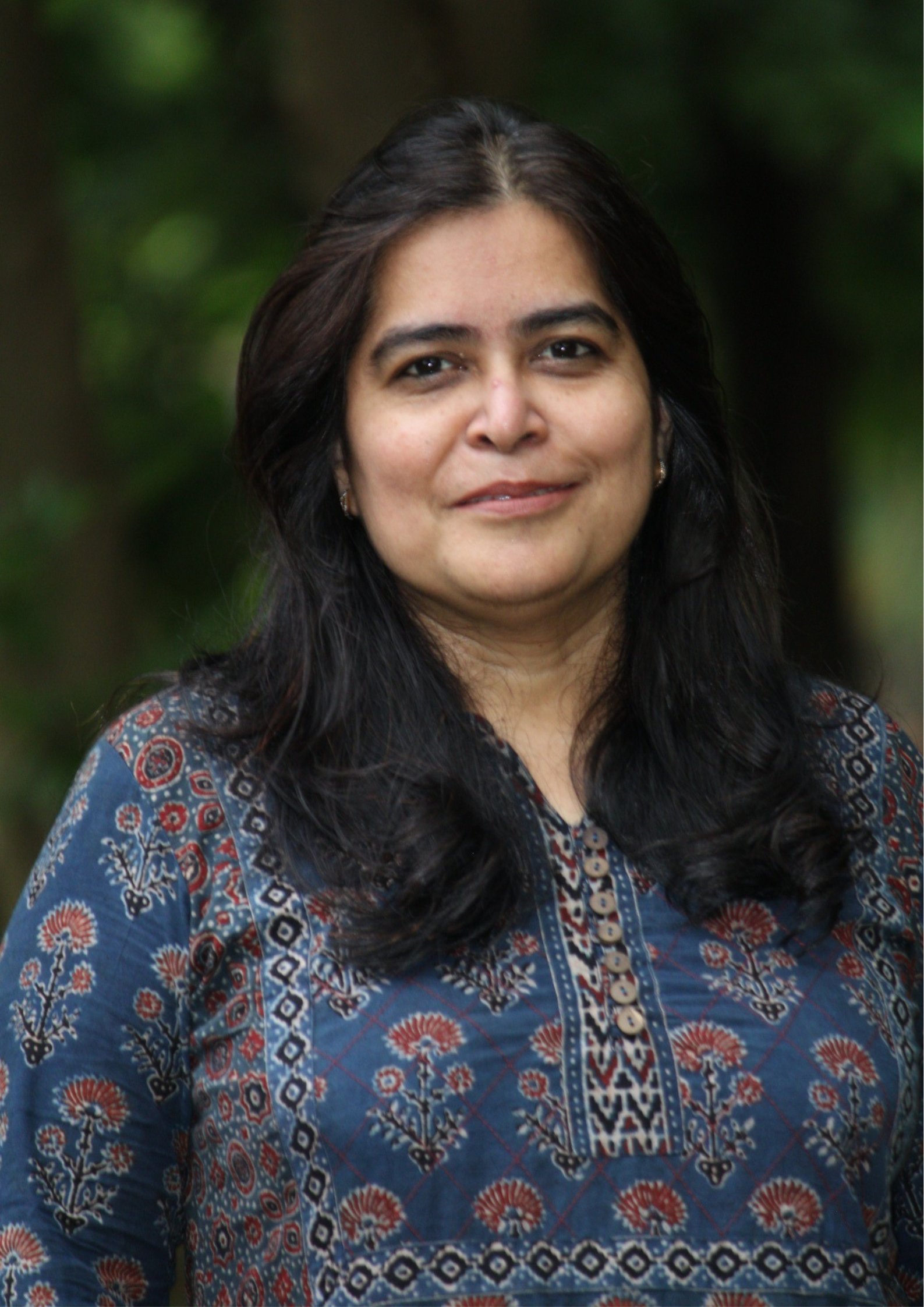
Sabah Khan
Sabah Khan is the co-founder of Parcham Collective, an organisation committed to building a just and inclusive society that celebrates diversity. Over the past two decades, she has worked at the intersections of gender justice, youth leadership, urban rights and community wellbeing.
Parcham is best known for introducing football for adolescent girls from Muslim neighbourhoods, using sport to build confidence, leadership, friendships and a sense of belonging, while creating opportunities for girls to claim public space. The organisation created history by securing the country's first municipal reservation of a public sports ground exclusively for girls. Parcham's work has been documented in the film Under the Open Sky by the School of Media and Cultural Studies, TISS, and has been screened at venues across India and internationally. Sabah has spoken at TEDx on Changing the World, One Friendship at a Time and was recognised by FIFA as one of the first ticket holders for the FIFA U-17 Women's World Cup India 2022. Parcham Collective received the Apollo Tyres Go The Distance Award in recognition of its contribution to Sports for Development.
Sabah founded the Savitri Fatima Foundation for Inclusive Development, whose flagship initiative, Guftagu, is a feminist community space in Mumbra. Through conversations, storytelling, creative expression, films, reading circles, movement, celebrations and collective reflection, Guftagu works to strengthen women's mental wellbeing by reducing isolation, fostering belonging, and creating opportunities for women to reclaim leisure, public space and their own narratives. Across both Parcham and Guftagu, Sabah's work is grounded in the belief that healing is not only an individual journey but also a collective, social and political process.
Across her work, Sabah challenges the narratives that sustain marginalisation and exclusion. Her book, The Queen, The Courtesan, The Doctor, The Writer: 50 Inspiring Stories of Muslims, is part of that endeavour. She believes that lasting social change requires not only resistance and anger, but also joy, humour and hope.