Workshop 3
Making Space for Stories of Grief
Grief is not a singular or linear experience, and children may express their responses to loss in ways that are often overlooked or shaped by adult expectations of how grieving should look. How might we create spaces where children’s experiences of grief can be acknowledged without defining them through loss? Drawing on narrative therapy ideas and practices the workshop invites participants to explore ways of accompanying children as they make sense of loss, sustain connections with those who have moved on and discover stories of love, belonging, and resilience that exist alongside loss.
We will explore how grief can be understood in relation to the relationships, values, commitments, and histories that matter to children rather than thinking of grief as a problem to be resolved or a process we will consider how children can be supported to give language to their experiences in ways that honour their own meanings and preferred ways of responding.
We will share how drawing, storytelling, letters and collective conversations can help make visible the relationships that continue beyond death, the skills and knowledges children bring to difficult experiences, and the people and communities who sustain them.
The workshop offers practitioners an opportunity to reflect on their own assumptions about grief and to develop practices that center children’s voices, agency, and meaning-making. Together, we will explore how therapeutic conversations can create room for sadness, opening possibilities for connection, remembrance, and preferred futures.
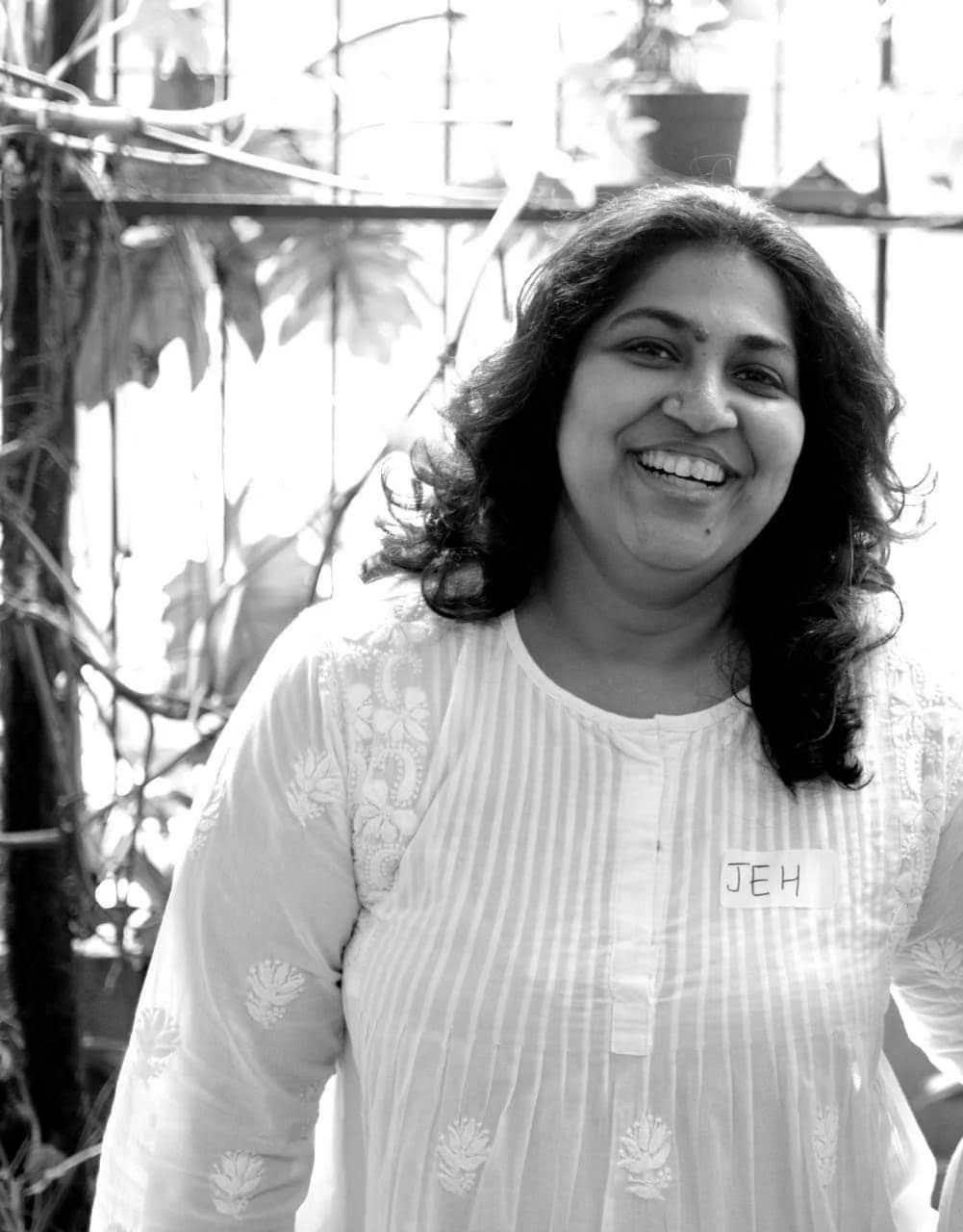
Facilitated by Jehanzeb Baldiwala
Jehanzeb Baldiwala has aligned herself with narrative ways of working for over twenty years. and is a voracious reader who believes in dreams and magic. She loves to travel and to connect with people.
She is a therapist, supervisor, trainer and Co-Founder of Narrative Practices India. Her work includes consulting with persons, families, and children in responding to a range of issues that include anxiety, depression, school related issues in addition to training and supervising mental health work. She has been instrumental in developing several long and shorter training programs in narrative practices with a team of narrative practitioners and mentors Shona Russell, Maggie Carey and Peggy Sax. She continues to develop and facilitate training in narrative ideas and practices and is visiting faculty for the Master's program in Life Span Counselling at the St. Xavier's university, Mumbai. She is also a mentor to several organizational leaders such as Apni Shala and Setco Foundation.
She has a keen interest in exploring the use of narrative ideas and practices in therapy as well as diverse contexts including supervision and development of professional identity of mental health workers as well as in organizational development. She has written several articles, participated in international conferences and contributed to documenting the narrative work being done in India.
Formerly Director of Mental Health Services and Head of Training, Ummeed Child Development center (2004 – 2021) she has also served as Director of Family Support and Social Rehabilitation Services at North East Community Center, Philadelphia, USA, and has a Master’s Degree in Applied Psychology from the University of Mumbai.
Peer reviewed Journal Articles:
1. Baldiwala, J., Kanakia, T., & Nayar S. (2022). PARTICIPANT REFLECTIONS ON NARRATIVE TRAINING PROGRAMS IN THE INDIAN CONTEXT. Journal of Systemic Therapies, Vol. 41, No. 1, 2022, pp. 71–88 https://doi.org/10.1521/jsyt.2022.41.1.71
2. Jehanzeb Baldiwala, Trishala Kanakia & Shoba Nayar (2022): Supervision experiences of Indian professionals engaging in narrative therapy training, The Clinical Supervisor, https://DOI.10.1080/07325223.2022.2112120
3. Baldiwala, J., & Kanakia, T. (2021). Using narrative therapy with children experiencing developmental disabilities and their families in India: A qualitative study. Journal of Child Health Care. https://doi.org/10.1177/13674935211014739
4. Baldiwala, J., Kanakia, T., & Nayar S. (2021). USING NARRATIVE PRACTICES IN DIVERSE INDIAN CONTEXTS. Journal of Systemic Therapies, Vol. 40, No. 2, pp. 59–79. https://guilfordjournals.com/doi/10.1521/jsyt.2021.40.2.59
5. Baldiwala, J., Sanghvi, J. (2020). Creative Responses to the Pandemic: Shared stories of caregivers and mental health practitioners. Sambhāṣaṇ Volume 1 : Issue 04, pp 131-136
https://mu.ac.in/wp-content/uploads/2020/09/131-136-Creative-Responses-to-the-COVID-19-Pandemic.pdf
6. Shetty, R., Baldiwala, J., & Vasunia, T. (2017). The I’m-perfect fathers group: A gathering of fathers of children with disabilities. Indian Journal of Occupational Therapy, 49(1) 29-33. https://www.aiota.org/temp/ijotpdf/ibat17i1p29.pdf
7. Mehrotra, S. & Baldiwala, J. (2018). Children with special needs and inclusive education. Compendium on Education 2018 by Narotam Sekhsaria Foundation.
8. Shetty R., Joshi A., Baldiwala, J. (2015). Conversations about Mr.Bad Handwriting: Using Narrative Ideas within the context of Occupational therapy practice. Indian Journal. Occupational. Therapy. | Volume 47 | Issue 1 | Page 73-77. https://aiota.org/temp/ijotpdf/ibat15i3p73.pdf
9. Sanghvi, J. & Baldiwala, J. (2015). Using narrative practices while working with children and families with developmental disabilities. Bombay Psychologist, 1&2.